Andrew Kaalberg's Path From NICC to the Shop Floor at The Adams Company

Andrew Kaalberg was a high school student who liked working with his hands when he enrolled in the Advanced Manufacturing Academy at Northeast Iowa Community College's (NICC) Peosta campus. That's where he first ran a CNC machine.
Today he's a full-time CNC machinist at The Adams Company, where we manufacture precision gears and shafts. He finished NICC's CNC Machinist Technician diploma in July 2026 while working on our shop floor.
NICC shared Andrew's story in June in its feature Precision and Purpose: Andrew Kaalberg’s Path to CNC Success. Quotes from Andrew and his NICC instructor in this post originally come from that article.
Starting CNC training in high school
Through the Academy, Andrew earned the CNC Operator Career Pathway Certificate in May 2025, before he graduated high school. The noncredit program takes three to four months and is offered at NICC's Cresco, Oelwein, and Peosta locations. Students learn precision measurement and CNC turning and milling, along with the manual machining and troubleshooting a production shop expects.
Andrew finished his diploma without student loans. Dual credit he earned in high school covered a significant share of his general education requirements for free, which kept his tuition low. NICC also offers tuition assistance for the CNC Operator certificate, and students who meet the eligibility requirements may be able to earn it at no cost.
“CNC is an amazing career that is underappreciated by a lot of people. It’s a career that allows people to make things, problem-solve, and work on more technical things without needing an expensive four-year college degree.”
- Andrew Kaalberg, CNC Machinist, The Adams Company

From the classroom to our shop floor
The Adams Company is an employer partner for NICC's CNC Operator program, and Andrew first heard about us when our team visited the college to meet students. He started with us in a role that was both a full-time job and an internship.
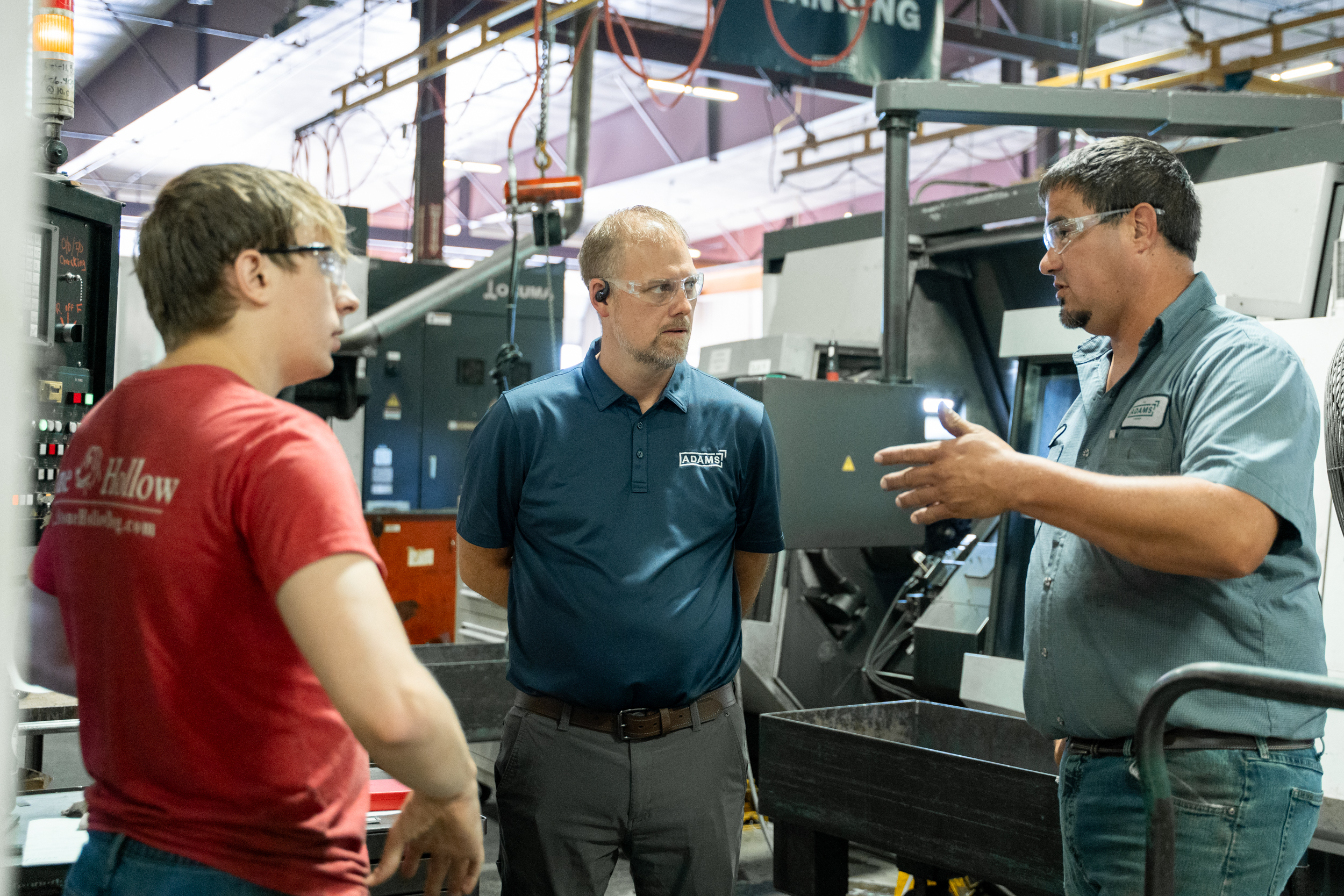
Much of that work meant taking raw material and a blueprint to make the part himself, held to the same standard as every job on our floor. Our CNC machinists run gear blanks and shafts on Okuma lathes like the LU4000EX and the Multus U-3000. Those lathes have live tooling and dual spindles, which let us finish more features on a part in a single setup. Andrew uses the precision measurement he learned at NICC to check each part against the print before it moves to the next operation.
His NICC instructors noticed his work ethic early.
“Andrew is a very dedicated and hard-working student. He likes to work with his hands and has a very good understanding of three-dimensional objects. He is the kind of student who will take a project and run with it.”
- Samuel Fleming, CNC Instructor, Northeast Iowa Community College
Why this work matters to us
We've made custom gears and shafts for well over a century, and our equipment has advanced with each generation of machinists. The constant is machinists teaching machinists. That handoff is how the OEMs who count on us keep getting parts that match the drawing, order after order.
A lot of students don’t realize they can build a CNC career close to home. You can start training in high school and finish without piling up debt. After that, it’s full-time work making parts that end up in equipment worldwide.
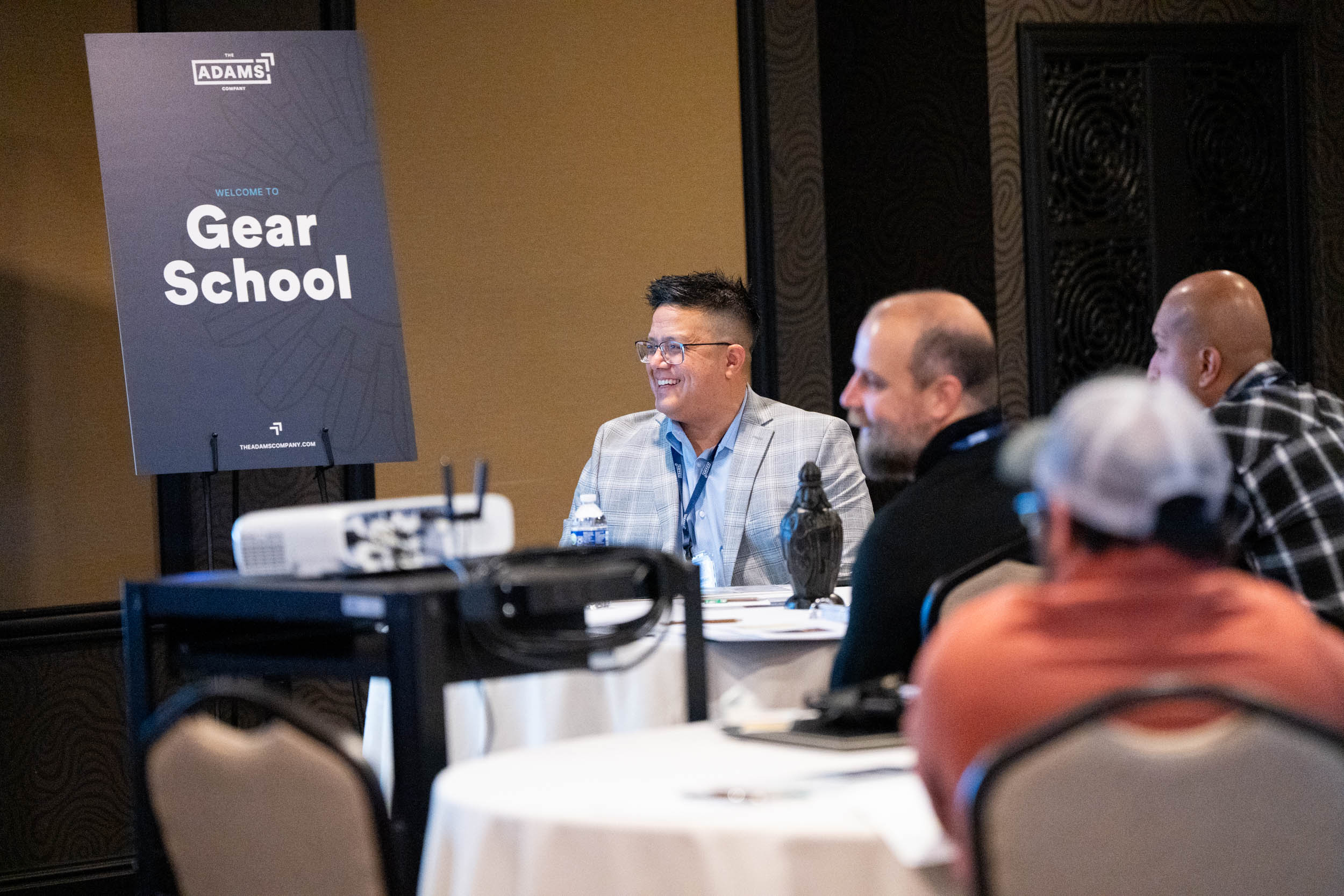
That's why our team visits NICC to meet students, and why we host student tours that bring young people onto a working gear shop floor before they pick a path. Gear School extends that teaching to people already in the industry, with two days of technical sessions on gear hobbing and AGMA inspection standards.
Skilled machinists are in short supply in Northeast Iowa. A recent Iowa State University study ranked machine shop jobs among the most in-demand manufacturing roles in the region. Employers listed print reading and precision measurement as core competencies, and Andrew uses both on every job.


Looking ahead
Andrew calls CNC a backbone industry for Northeast Iowa, and his advice to anyone considering it is short.
“If someone were to tell me they were considering the CNC curriculum, I’d ask them, ‘Why not do it?’ There are a lot of people looking for a rewarding career, and CNC provides that.”
- Andrew Kaalberg, CNC Machinist, The Adams Company
Students who want to start down the same path can explore NICC's CNC Operator Career Pathway Certificate and CNC Machinist Technician diploma at nicc.edu. If you're trained and ready to run parts, see current openings at The Adams Company. A lot has changed since 1883, but the way we pass on the craft hasn't.
Congratulations on the diploma, Andrew. We're glad you're here.
Frequently asked questions
What is the CNC Operator Career Pathway Certificate at NICC?
It's a noncredit program at Northeast Iowa Community College that takes three to four months to complete. Classes are offered in Cresco, Oelwein, and Peosta and cover CNC turning and milling along with precision measurement. Graduates can go straight to work or continue into NICC's CNC Machinist Technician diploma.
How long does it take to become a CNC operator?
NICC's CNC Operator Career Pathway Certificate takes three to four months. Andrew Kaalberg earned his certificate in May 2025, then completed the full CNC Machinist Technician diploma in July 2026 while working full time at The Adams Company.
Can high school students start CNC training?
Yes. Through NICC's Advanced Manufacturing Academy, high school students can earn the CNC Operator Career Pathway Certificate and dual credit toward general education requirements. Andrew completed his certificate before graduating from high school.
Do you need a four-year degree for a career in CNC machining?
No. Community college certificates and diplomas prepare students for CNC operator and machinist roles, and many students work in the field while they finish school. Andrew started full-time work at The Adams Company before completing his diploma.
What does an earn-and-learn position in manufacturing look like?
At The Adams Company, Andrew's role was both a full-time job and an internship. He received material and a blueprint and manufactured the part himself. He used the skills from his NICC classes on every part.
What skills do CNC machinists use on the job?
Print reading and precision measurement are central to the work. Machinists also troubleshoot and make adjustments during a run. At The Adams Company, those skills support print-to-spec gear and shaft manufacturing backed by in-house ISO 9001 inspection.